Port-Revel as seen by Fluctus: when sea giants are tamed at 1:25 scale
Suez Canal, Panama, storms... Discover how sailors face the sea's worst traps on an artificial lake.
Press
Published on Thursday, October 1, 2026
How Sailors Train to Pilot Sea Giants... on Miniature Boats!
Commercial shipping is the true engine of the global economy. Whether raw materials, manufactured goods, or foodstuffs, the vast majority of our trade travels by sea. However, maritime accidents remain a reality with colossal environmental and economic consequences.
With an annual average of over 2,600 recorded maritime incidents and accidents, the industry is constantly seeking solutions to enhance safety at sea. And one of the most impressive methods relies on scale models!
Port Revel: The Scale Model Training Center
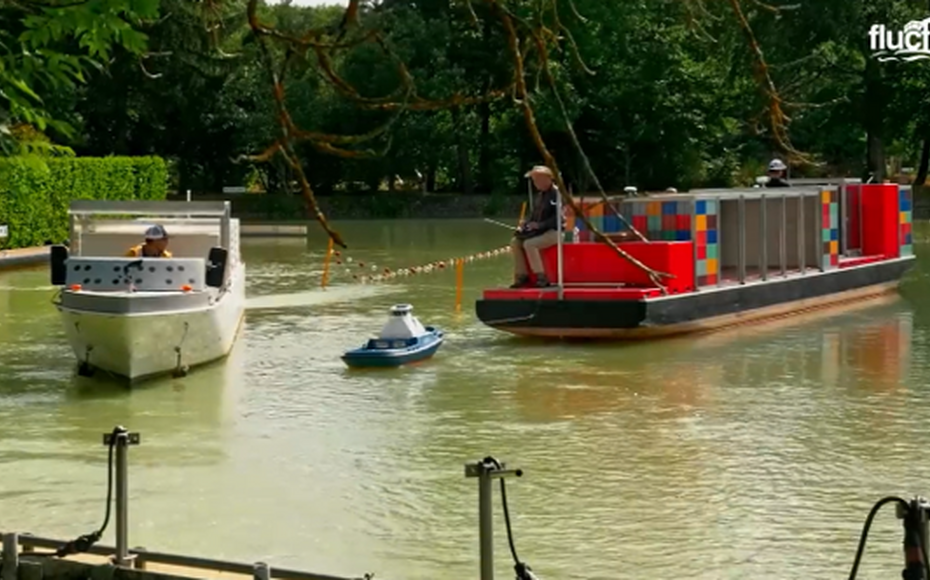
It is at the Port Revel training center that captains and pilots from all over the world come to perfect their navigation skills. Founded in 1967, this unique facility features an artificial lake where 1:25 scale models, representative of the largest tankers and container ships, operate.
To ensure optimal and realistic simulation conditions, the center ingeniously adapts its environment—for instance, by planting trees around the lake to break the wind and control the local weather.
Simulating the World's Most Critical Waterways
At Port Revel, sailors are confronted with famous scenarios and waterways:
-
The Panama Canal: A strategic passage used by over 13,500 ships each year, renowned for its narrowness and difficulty.
-
The Suez Canal: A 4-meter-long training area faithfully recreating the old layout of the Suez Canal, complete with its straight sections and sharp bends.
Mistakes Allowed... to Better Protect the Oceans
Navigating scale models offers one major advantage: the freedom to make mistakes. While a real container ship can exceed 100,000 tons and measure over 300 meters, these miniature replicas allow captains to test complex maneuvers, handle emergency situations, and fine-tune towing or berthing without any risk.
During an intensive 5-day training course, crews learn to anticipate:
-
Air draft constraints under bridges
-
Navigation in shallow waters or extremely narrow passages